The 3 Main Phases of Retirement Planning

This post was last updated on March 27, 2026, to reflect all updated information and best serve your needs.
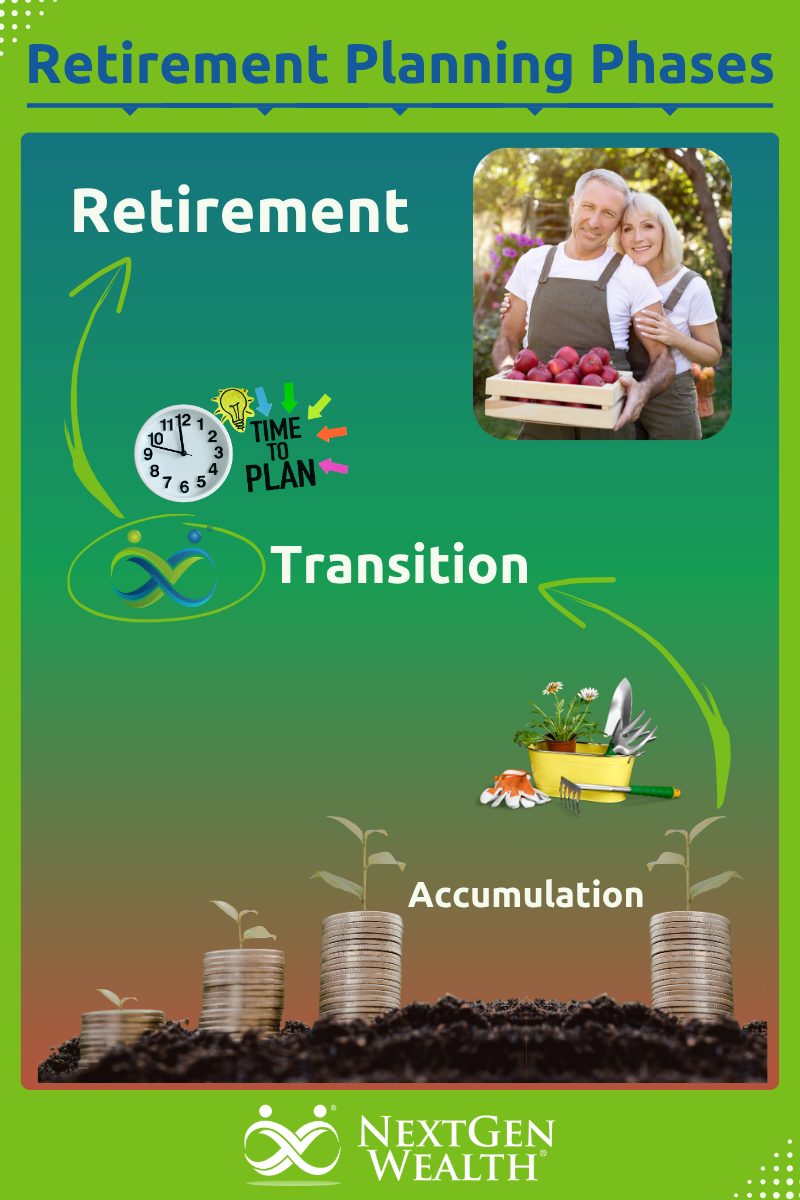
There are three main phases of retirement planning: accumulation, transition, and decumulation (retirement). Depending on which you’re in, you’ll need to focus on different aspects of your financial life. The advice and expertise you need also change as you move through these phases.
Someone who’s in the accumulation phase will need to focus on avoiding risks and growing retirement assets and income streams. The transition phase bridges the gap between accumulation and decumulation by helping clarify goals and finalize your plan. As you move into the decumulation/retirement phase, many changes happen. Planning things out makes a huge difference.
Table of Contents
Phases Building Your Retirement "House"
What phase you’re in might not seem very important. It is. If you were building a house, you would engage different professionals for each phase of construction. A contractor specializing in building a foundation could probably build the whole house, but that’s not their specialty.
Accumulation
Building a home starts with saving a down payment, securing land, and gathering materials. You’ll lay the groundwork, get a solid foundation, and get ready to build. This represents what’s probably years of preparation and accumulation of materials to build the house (retirement) you've always dreamed of.
In the same way, the early stages of retirement concentrate on saving and investing for the future. Along the way, you can create a mental rolodex of "when I retire" items. Year after year, your anticipation and portfolio of assets grow.
Transition
As you transition into the actual building of your house, you’ll start to see things take shape as you build the walls and roof. What started as a pile of plans and building materials slowly takes shape. You’ll engage with contractors, plumbers, interior designers, finish carpenters, and other professionals to finish your house.
Similarly, you'll start engaging with professionals and building your retirement team. You can see your list of "someday" items turn into real possibilities. You can use all your assets, hopes, and dreams to craft a cohesive retirement plan to ensure you make the most of your golden years.
Retirement
Finally, it’s time to start living in your retirement home. Maintenance and protection of what you’ve built become much more important. Things will change over time, but as long as you have a solid foundation, you can adjust your home's features to suit your needs.
Retirement planning works the same way. Your financial plan should be an ongoing process of refining and improving your retirement. Retirement isn't for the faint of heart, but a clear plan helps reduce the stress and anxiety of this transition.
The Accumulation Phase
When it comes to building your retirement, the accumulation phase is usually the longest one. Accumulation (hopefully) starts early in your working career and builds until you’re ready to step into retirement. Keep investing in your 401k, IRA, and let your investments grow.
Risks in the Accumulation Phase
The biggest risks you face in the accumulation phase are death, disability, divorce, and unemployment. Most of these are something you have limited control over. However, there are ways to reduce these risks.
Proper Insurance Coverage
Having proper life insurance and disability coverage is critical in the accumulation phase. If the primary wage earner in the house dies or becomes disabled, you may never accumulate enough money to retire comfortably. Ensure you have sufficient coverage, but don't overinsure.
Catastrophic Life Events
Divorce and unemployment aren’t completely out of your control, but you’re only half of the equation. These aren’t something you can just insure away either. Prenuptial agreements can help keep order in the case of divorce, but they can’t prevent it from happening.
Unemployment just happens. Despite our best efforts, we’re often forced to pivot and change career paths. Layoffs, restructuring, and office politics can be brutal, so rolling with the punches is an important skill.

How to Accumulate
Besides the risks associated with the accumulation phase, you’ll want to really pay attention to how you accumulate wealth for the future. Decisions on Roth or not to Roth, investing in real estate, or understanding stock options may all be factors.
The Tax Tricks the IRS Plays
As an example, if all of your retirement assets are in a traditional IRA or 401k, you may run into issues with required minimum distributions (RMDs) later on. Strategies like a backdoor Roth conversion may also be needed as you build wealth.
Knowing which account types are best and calculating how much you need to be saving are key in this phase of life. You also need to ensure you're adjusting your savings to match your lifestyle. Costs can creep up on you over time.
Family Changes Take Priority
Another thing to consider is the way your family life may change during your accumulation phase. Sometimes adding one child turns into two (or more) children – twins or triplets, anyone? Maybe you got married sooner (or later) than you thought.
These types of changes and transitions can require significant shifts – personally and financially. The decisions you make in your life have tangible effects on your heart and your wallet.
The Transition Phase
Here’s where your retirement goals and lifestyle really start to take shape. At this point, you’ve accumulated most, if not all, the assets you’ll need in retirement. Now you need help sorting through a big pile of choices about when and how to enter retirement.
How to Tell if You’re Entering the Transition Phase
Usually, people in the transition phase are about 5 years away from retirement and have accumulated a significant amount of retirement funds - usually $750,000 or more. At this point, you’ll determine if you can live off what you’ve saved. If the answer is yes, then you should be able to set a date to walk away from work.
Many people don’t have a pension, but if you do, you’ll probably be nearing eligibility to draw as well. Many pensions require a certain time period of employment and/or a certain age you need to reach. Once you’re within a few years of being eligible, you’re probably in the transition phase.
When Can You Retire?
There isn’t necessarily a specific age you must be to retire. However, most people are typically in their upper 50’s or 60’s when they start the transition to retirement. Keep in mind, you need to be emotionally and financially ready to retire.
Adjustments to Your Lifestyle
As you transition into retirement, you’ll need to make many adjustments as you redefine what life will look like. You’ll need to determine what you’re retiring to, not just what you’re retiring from. Clint’s book, Retirement the Right Way, discusses this incredibly important topic in depth.
Take the time to uncover everything you still feel you need to accomplish in life. You need to decipher what kind of legacy you want to leave. Define what a fulfilling life looks like moving forward.
Social Security Withdrawal Strategy
Another key decision in the transition phase is when to begin drawing Social Security. Your Social Security withdrawal strategy can significantly impact your retirement income and quality of life. Except for rare instances, this is a permanent decision requiring careful consideration.
Correct Any “Mistakes” from the Accumulation Phase
In the transition phase, you’ll probably need to do some cleanup from “mistakes” or missed opportunities during the accumulation phase. Life is messy, and your financial life may not be any different. It might take some time to find all your old 401k documents, complete Roth conversions, and get everything set up for retirement.
There may even be some opportunities you didn’t know existed. It’s kind of like the saying, “can’t see the forest through the trees.” Just having a third-party review everything and ask the right questions can reveal many opportunities you might have missed.
Leaving the Transition Phase
By the time you leave the transition phase and actually begin retirement, you’ll have everything in place so you can coast into retirement with little worry. We’ve handled all the heavy lifting. All the income sources are set. Now you just need to take the final step into retirement.
Decumulation Phase – Retirement
As the heavy lifting from the accumulation and transition phases wraps up, the only thing left to do is enjoy retirement. Now it's time to focus on your quality of life and enjoy the fruits of your labor.
You’ll still need to implement the strategies developed in transition planning. There are still strategies to save money on taxes and other financial considerations, too. However, you’ll be shifting gears. Instead of running pedal to the metal all the time, you can put things on cruise from here on out.
You’ll still have to make some choices about Medicare and long-term care, but there are fewer and fewer big decisions you need to dwell on. Life always throws us curveballs, but you can’t prevent those.
Estate and Legacy planning
In retirement, you’ll continue to shape what your wishes are for your estate and legacy. You’ll be putting the final touches on your legacy and spending more quality time with the people you love. This is the time to teach and guide others through the paths you once traveled.
Life will look a bit different in retirement, but it can (and should) be every bit as fulfilling as any other stage of your life. Some people focus on volunteering, charity, or gardening. Retirement is a great time for whatever activities bring you peace and contentment.
NextGen Wealth Specializes in Retirement Transition
NextGen Wealth specializes in helping hardworking savers within 5 years of retirement. We work with people in the transition phase to step into retirement with confidence. Check out our Who We Serve page for a more detailed description of who we serve best.
NextGen Wealth starts working with people as they transition into retirement, and we stay with them throughout their journey. Contact us today to get your no-obligation financial assessment and see if we're a good fit to work together.
 This article was written by